StackFit
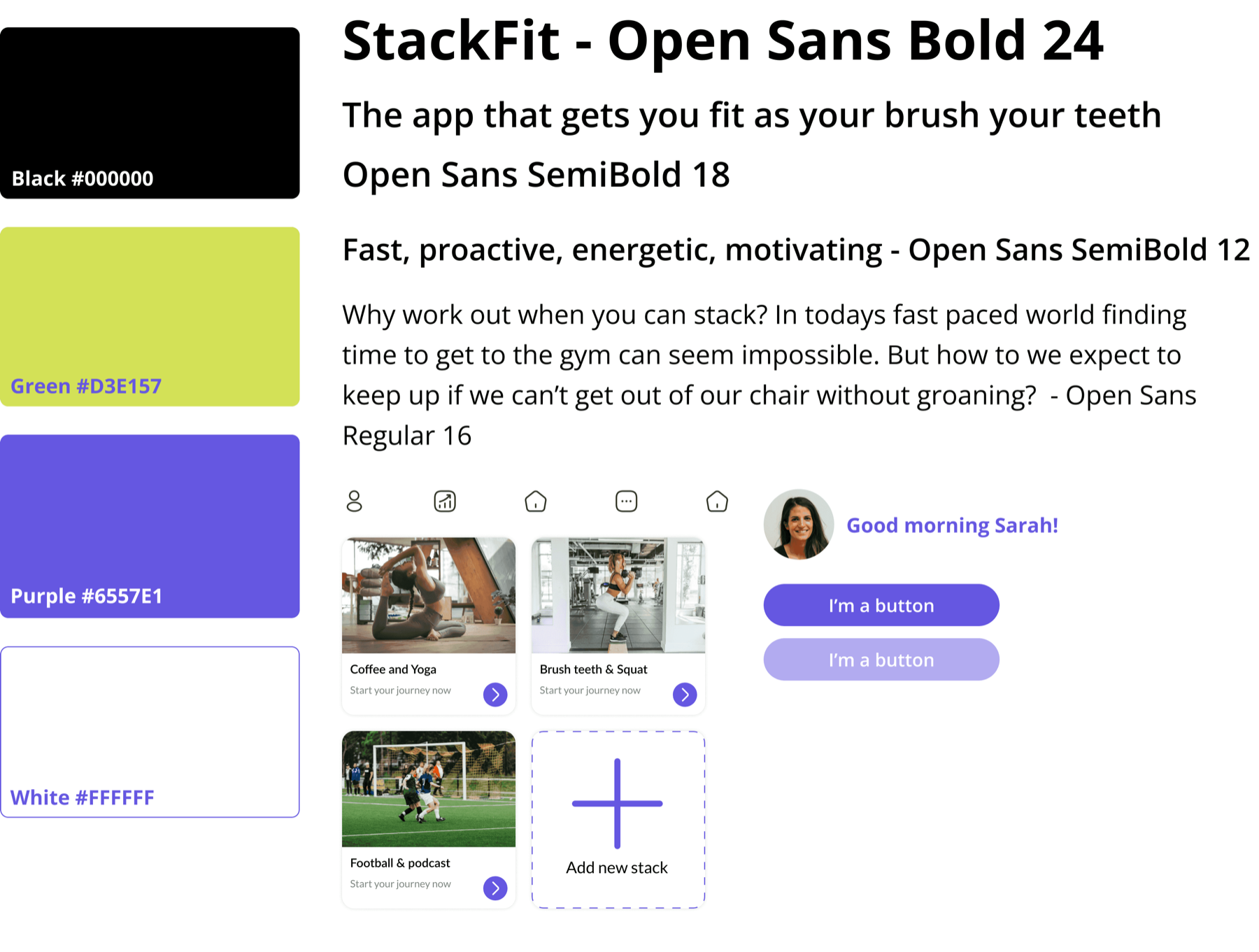
A concept app for busy young professionals who know exercise matters but can’t find the time. Instead of asking for an hour at the gym, StackFit links a short workout to something you already do every day, like your morning coffee or brushing your teeth.
From a habit to a streak · 01 / 03
Build on a habit
Create a stack
A stack is an existing habit plus an exercise and a number of minutes. The habit is the reminder.
Scroll to follow the story
- 49 survey responses
- 15 interviews
- 20 usability tests
Short on time, and feeling guilty about it
The people we interviewed knew exercise was good for them. What they lacked was time: a workout was the first thing to go, and skipping it left them feeling lazy and guilty.
We built the app on habit stacking: tying a new habit to one that already exists, so the existing habit becomes the reminder. Coffee becomes the cue for yoga, brushing your teeth the cue for squats.
Four methods, one consistent answer
- survey responses about exercise habits
- interviews with young professionals
- competitor apps compared
Are you exercising as much as you’d like? (49 responses)
What stops you exercising more? (42 responses)
We compared five fitness apps on value proposition, audience, focus and tone. All of them are built around workout plans you have to make time for; none combined habit stacking with time management. We also scored Seven, the closest competitor, against Nielsen’s ten heuristics.
“A product that helps me find time for short exercise sessions in my busy routine would be incredibly valuable.”
Interview“I feel lazy at the end of the day if I haven’t exercised.”
Interview“When you don’t have time, doing five squats is better than doing nothing.”
Interview
Time was the barrier, not motivation to start
The empathy map, the proto persona (Emma, 32, HR manager in Barcelona) and her journey map all pointed the same way. The only exercise in her day was the walk to work, something she already does. That pointed us to attaching movement to existing habits instead of asking for extra time.
“A product that promotes habit stacking and rewards consistency will help busy young professionals fit more exercise into their days.”
From flow to final UI in ten days
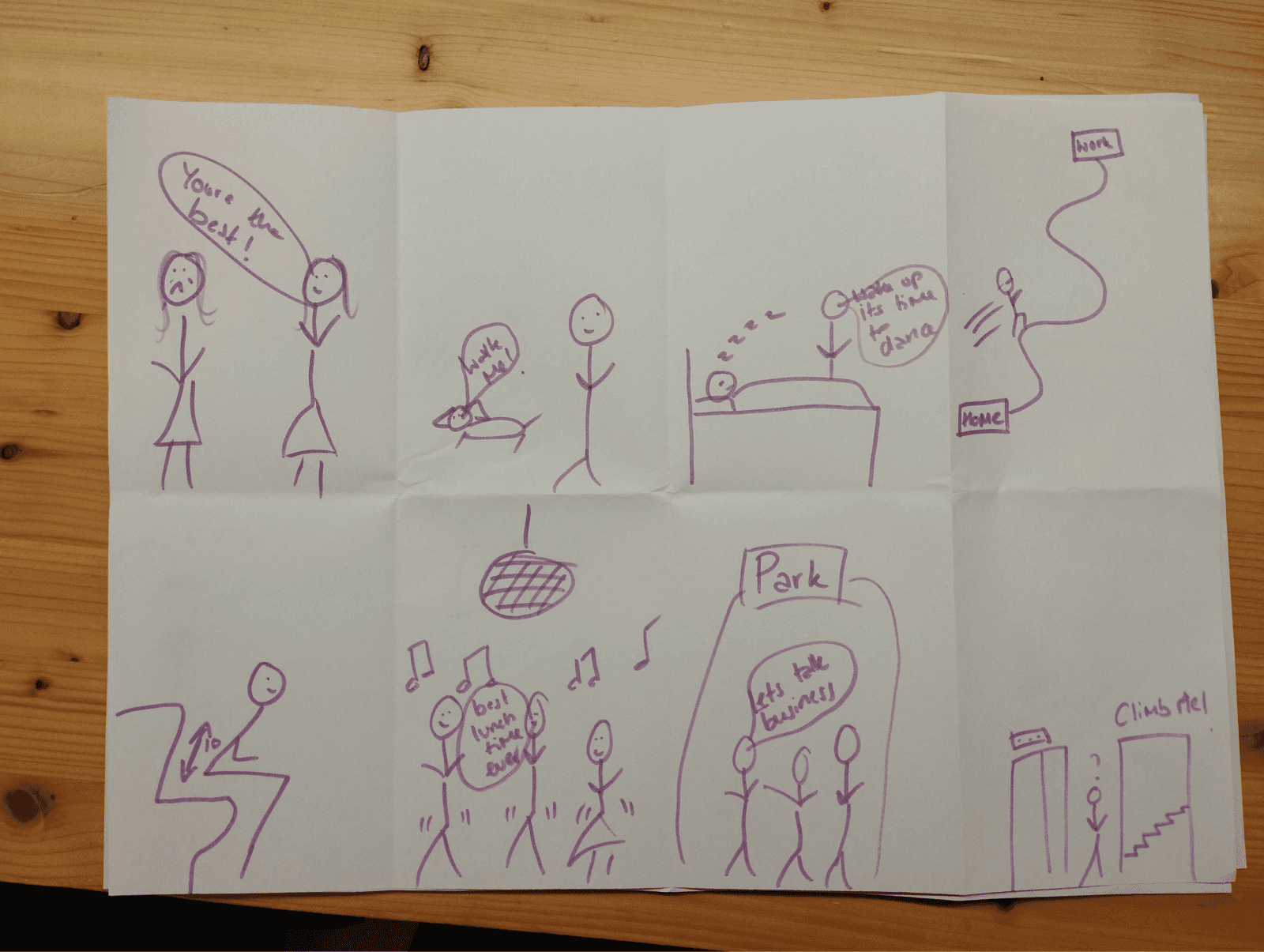
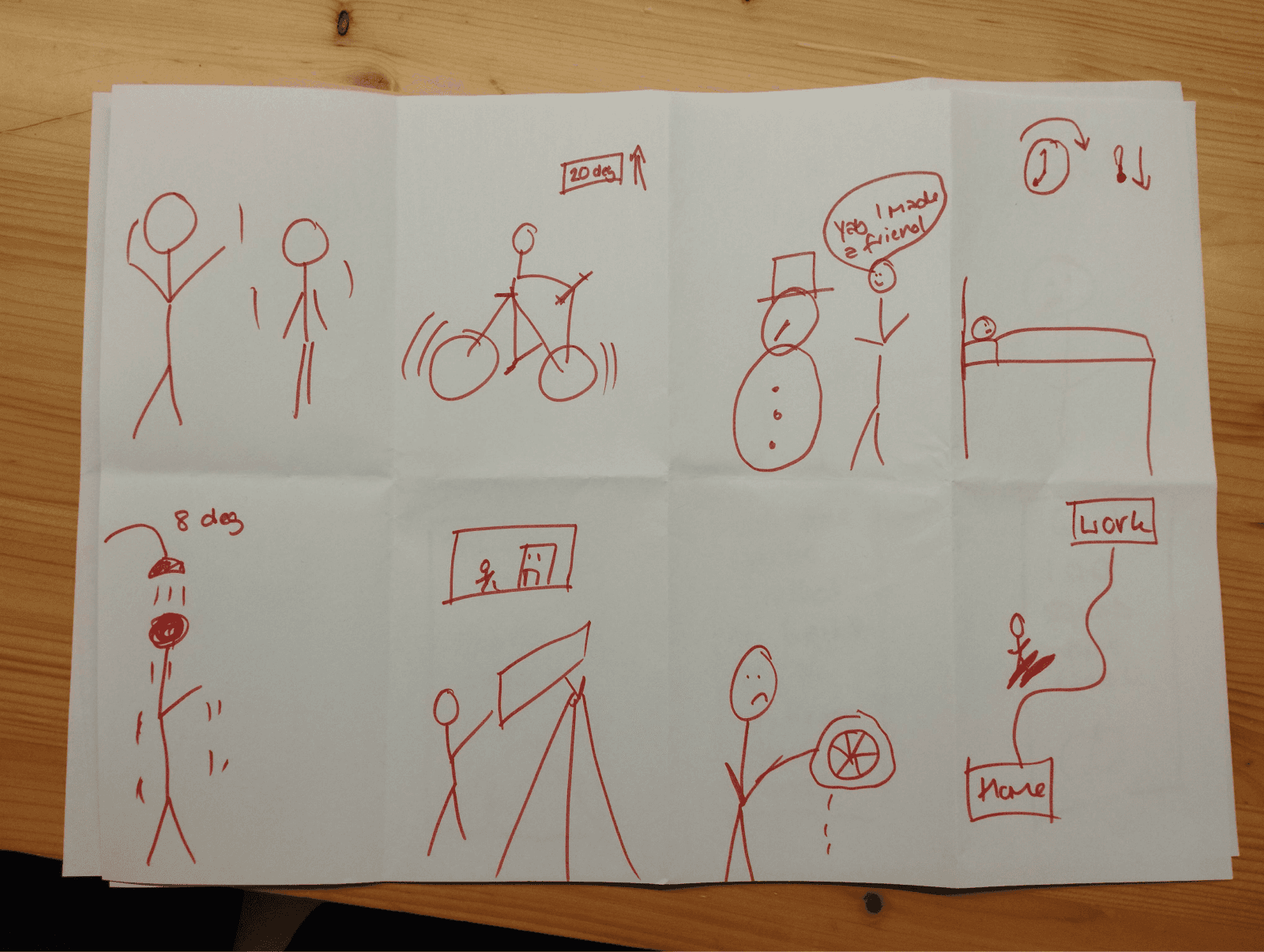
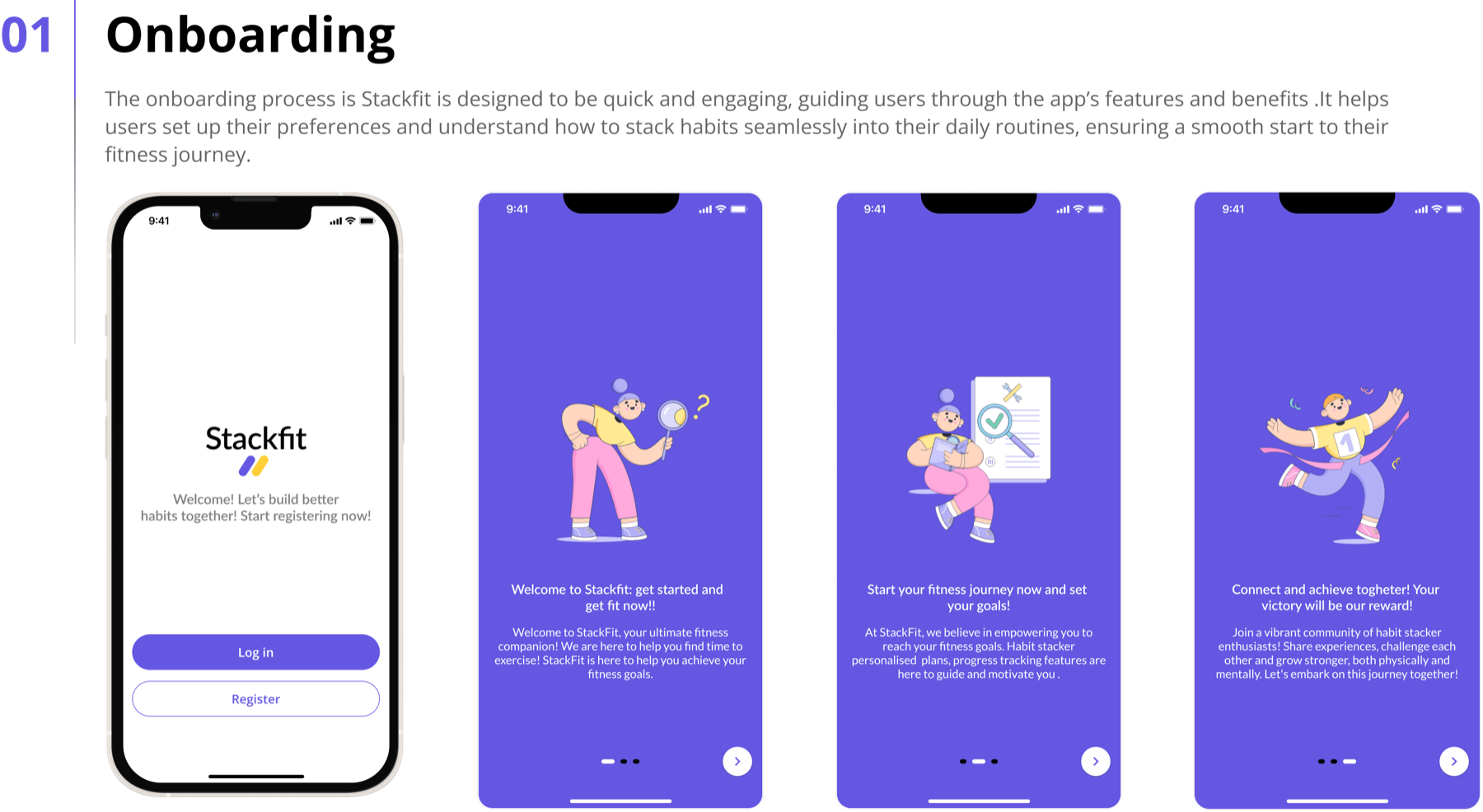
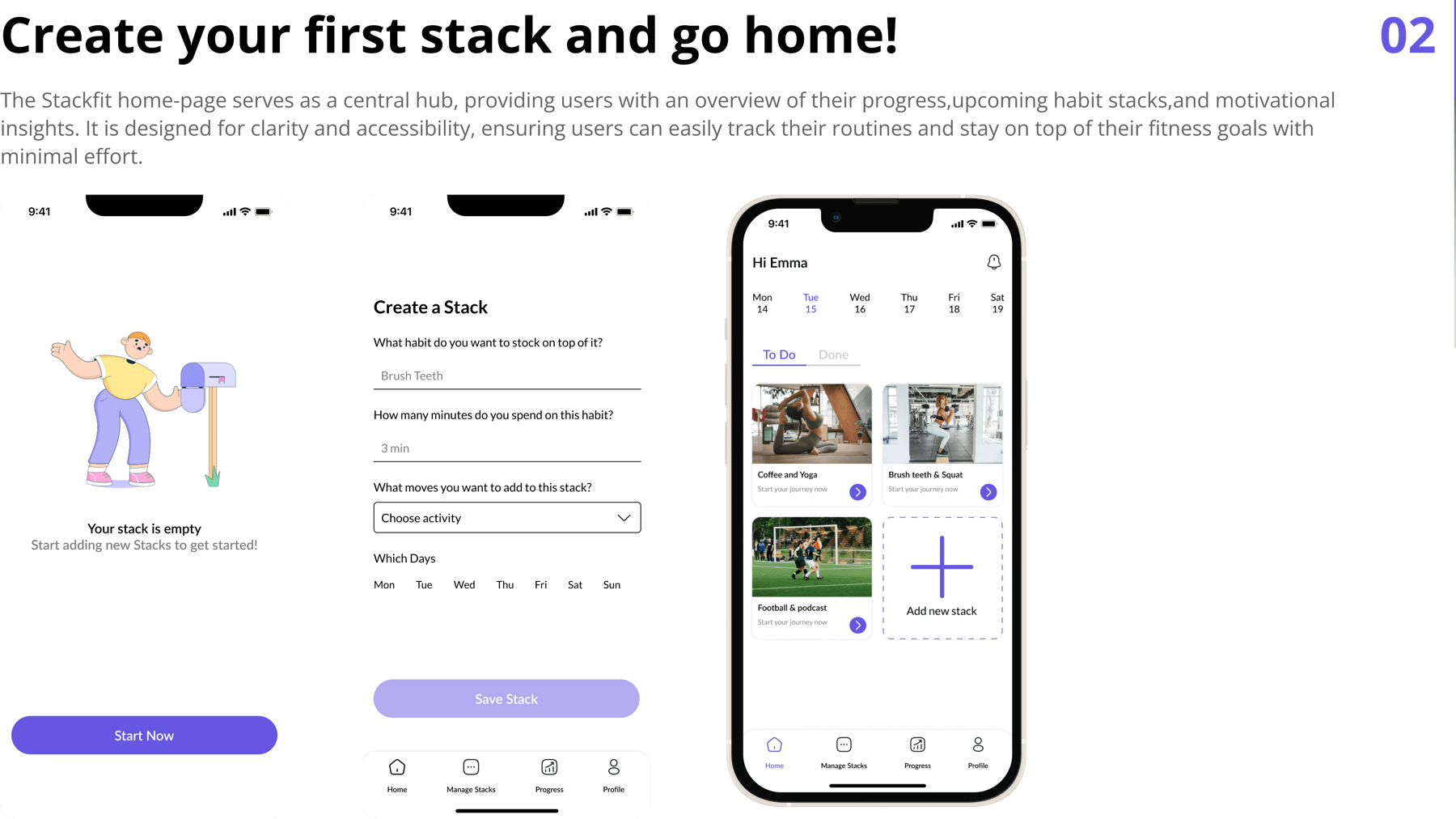
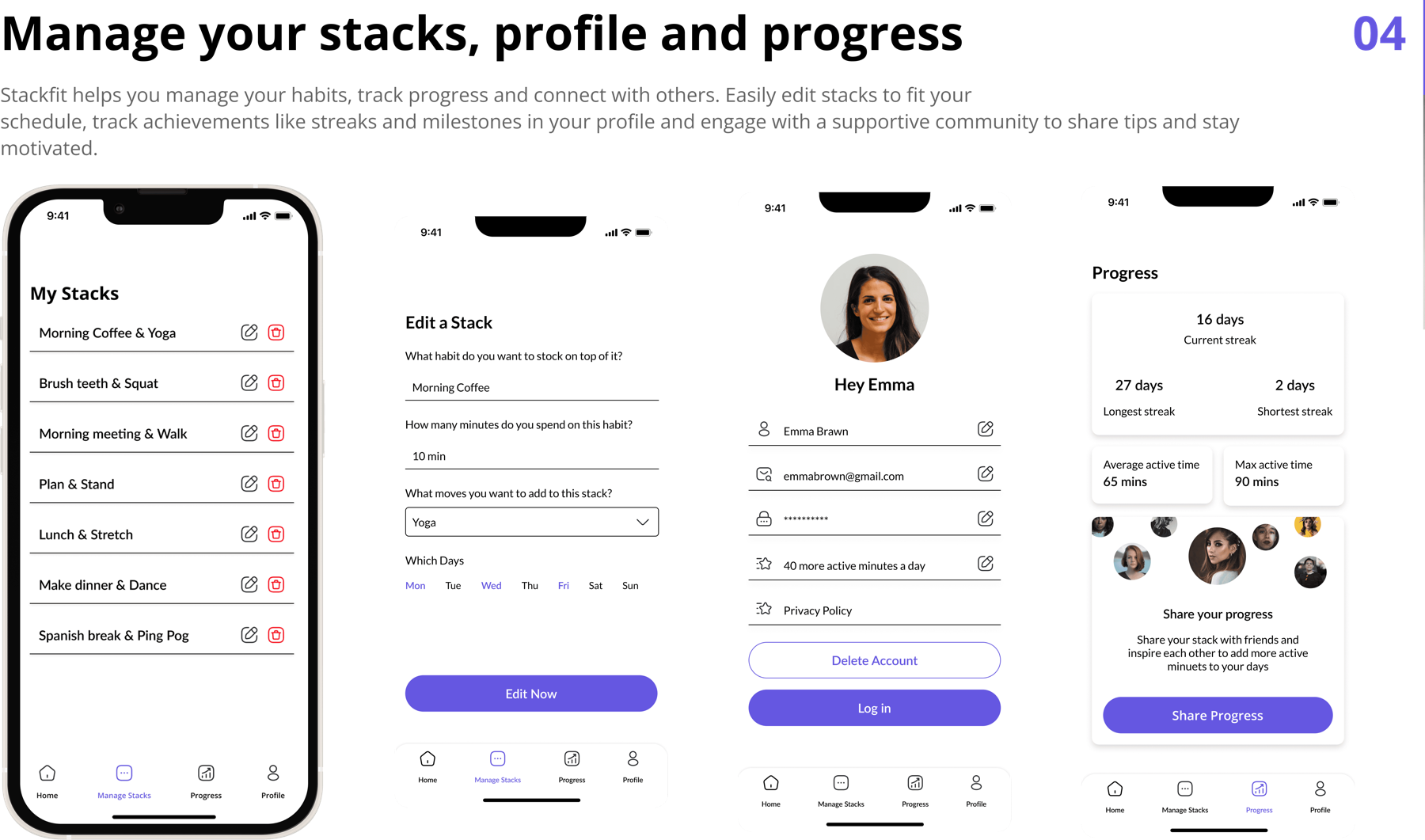
We mapped the daily loop, from sign-up to creating a stack and completing it, built a clickable mid-fi prototype and ran 20 usability tests. Testing changed how flexible the routines were, how progress was shown and how clear the calls to action were.
Four flows, from first launch to a streak
1. Which habit to build on?
2. Which exercise?
3. How many minutes?
4. On which days?
After my morning coffee, I’ll do 5 minutes of squats.
3 day streak · 5 days a week
Build on habits, not free time
A stack is an existing habit plus an exercise and a number of minutes. The habit is the reminder.
The user sets the routine
Four answers: the habit, the minutes, the exercise and the days.
Make small wins visible
Each stack moves from To do to Done, and clearing the day gets its own screen.
Streaks for accountability
Current and longest streak, shareable with friends.
How I’d know it works
- Activation
First stack created
Is the idea clear after onboarding?
- Engagement
Stacks done per week
Is the habit a strong enough trigger?
- Retention
Active after 7 and 30 days
The real test of the hypothesis.
- Usability
Time to create a stack
If setup takes longer than the workout, the flow has failed.
StackFit was one of my Ironhack projects, built with one other designer, and my first time running the whole process in a short sprint. It hasn’t been built. Next I’d test the key flows with more people, then build a small MVP and see whether the streaks keep people coming back.
Want every detail? Read the full case study.